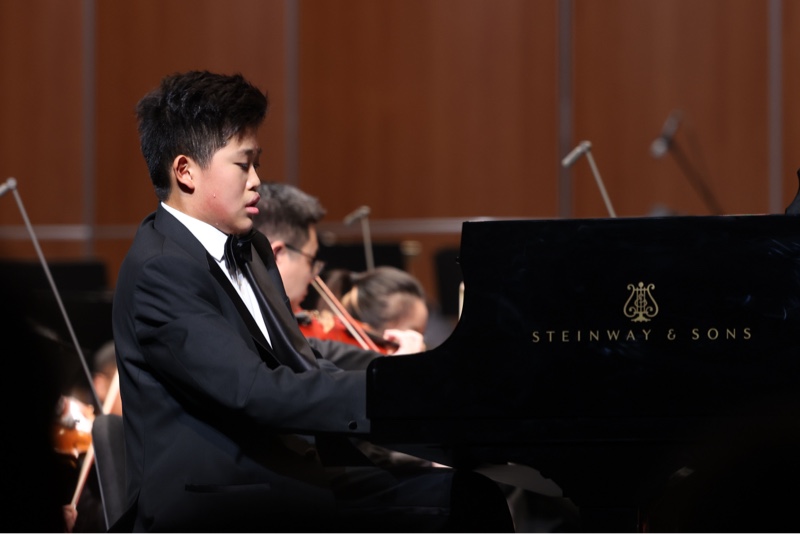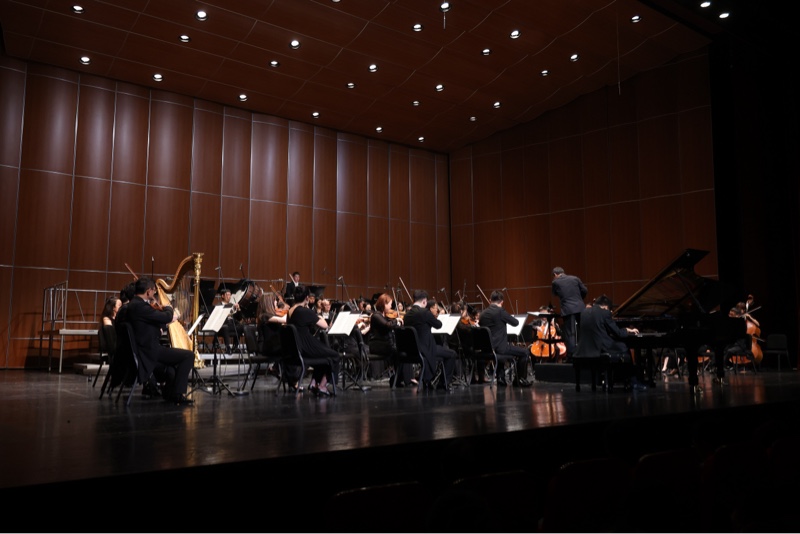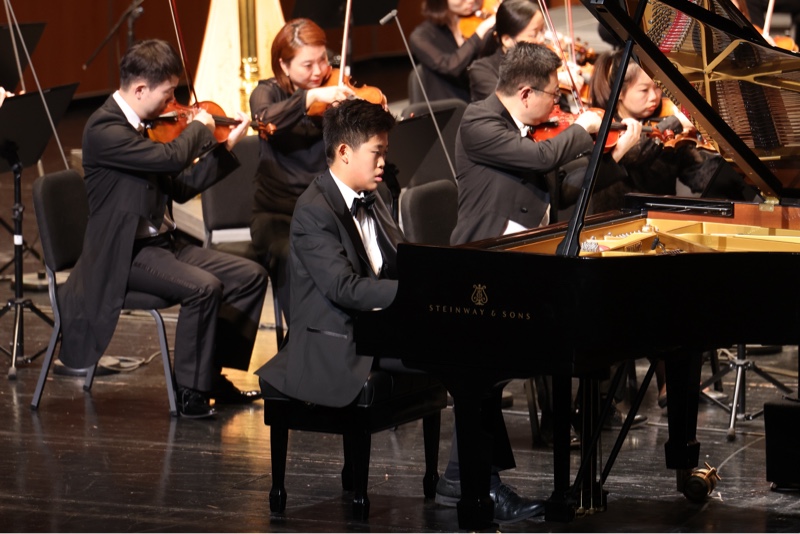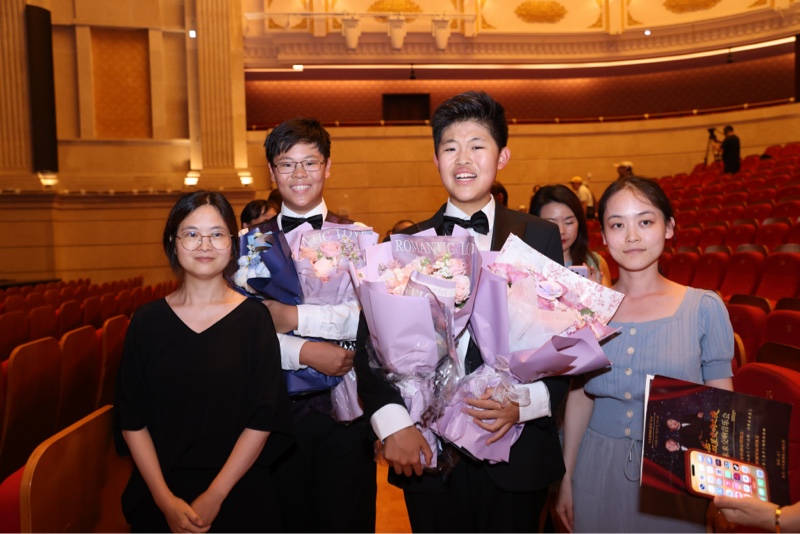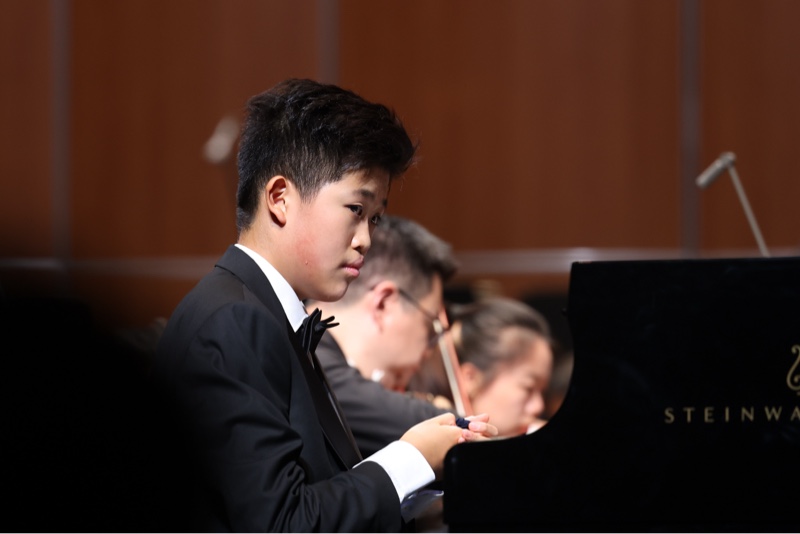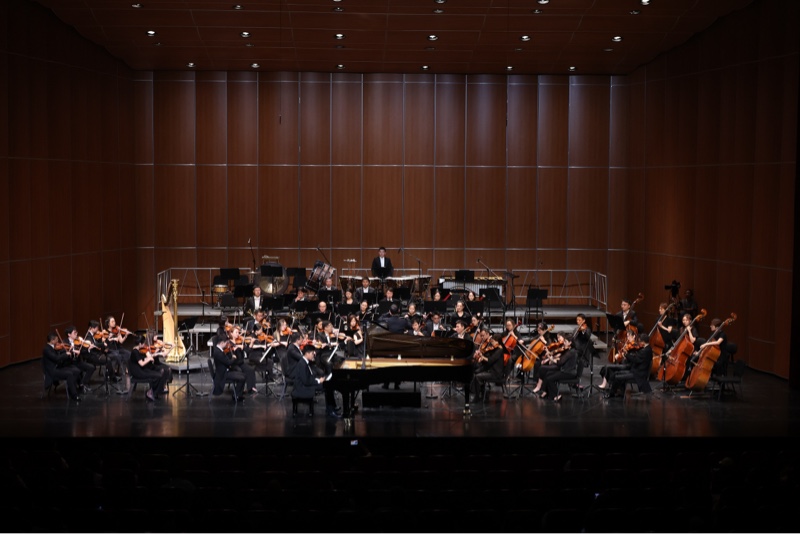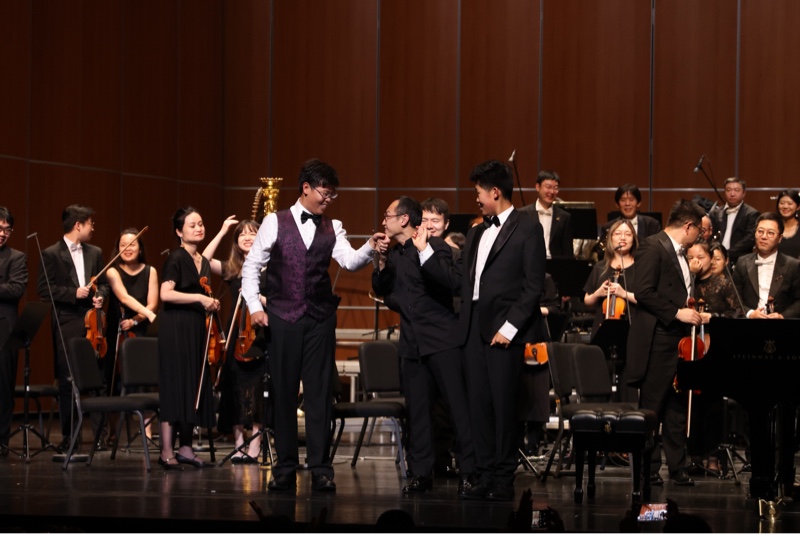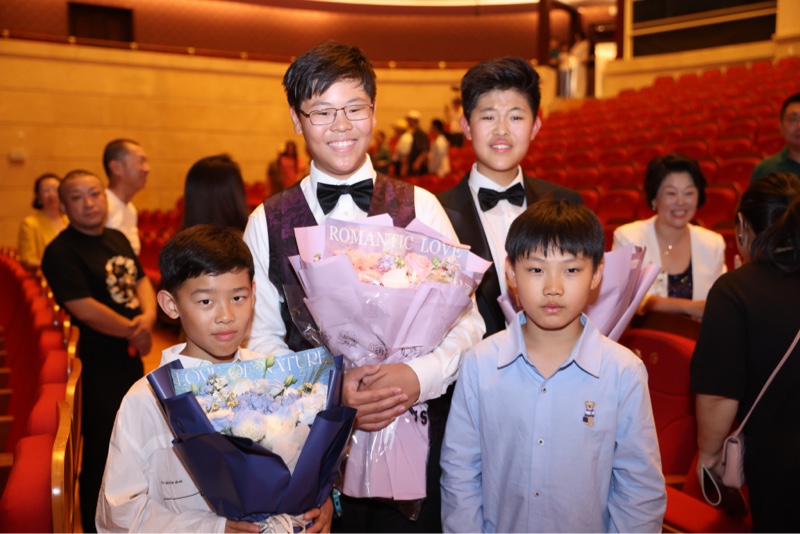


On 24 July 2026, 16-year-old pianist Kevin Tan performed Beethoven’s Piano Concerto No. 5 in E-flat major, Op. 73, the “Emperor” Concerto, at the China National Opera House Theatre in Beijing, as part of the Peace and Future Symphony Concert — Kevin and Carey: Young Stars Symphony Night. The work was performed with the China National Opera House Symphony Orchestra, conducted by Yuan Ding.
This concert marked an important moment in Kevin Tan’s artistic journey. Born in Beijing and now studying in the United Kingdom, Kevin returned to his birthplace to perform one of the greatest works in the piano concerto repertoire with a national-level professional orchestra, on one of China’s major classical music stages. The concert attracted thousands of audience members in the theatre and reached 3.82 million online viewers through the live broadcast on China.com.cn. The event also received wide attention from major Chinese media, including CCTV, BeijingTV,, Xinhua News, China Daily, China News Service and China Youth Daily.
Beethoven’s Emperor Concerto is one of the most monumental works in the piano concerto tradition. Written with grandeur, nobility, and symphonic depth, it demands not only technical command, but also maturity of spirit, structural understanding, and emotional breadth. For Kevin, this performance was more than the interpretation of a classical masterpiece. It also resonated deeply with his own personal journey.
Kevin’s path to the piano has not been straightforward. During childhood, he suffered serious injuries to his right elbow and had to spend years away from the instrument. His return to piano study at the age of nine was driven by an exceptional love of music and a determination to continue despite difficulty. In this sense, Beethoven’s Emperor Concerto — with its strength, dignity, struggle, lyricism, and final sense of triumph — seemed to reflect Kevin’s own story of injury, persistence, return, and growth.
In this Beijing performance, Kevin brought to the concerto not only youthful energy, but also a striking degree of control, sensitivity, and musical maturity. His playing combined brilliance with restraint, power with lyricism, and technical clarity with a deeply personal sense of expression. Rather than treating the work merely as a display of virtuosity, he shaped it as a musical journey — one that moves from grandeur and assertion to tenderness, reflection, and renewed strength.
Professional musicians who performed alongside him also recognised the maturity of his artistry. Yan Wei, Head of Percussion at the China National Opera House, spoke highly of Kevin’s collaboration with the orchestra. He recalled a particularly demanding passage in the final movement, where the piano and timpani must coordinate closely in a long and exposed exchange. According to Yan Wei, Kevin maintained constant eye contact and musical communication, carefully following and responding to each note, showing an instinctive sense of ensemble rarely seen in someone of his age. Yan Wei described Kevin’s performance as having the presence and experience of a mature pianist. He noted Kevin’s refined musical handling, expressive depth, and strong ability to collaborate with the orchestra, saying that his stage manner and ensemble awareness were far beyond what one would normally expect from a secondary-school student.
The audience response was equally warm. Many listeners were moved not only by the grandeur of Beethoven’s music, but by the sincerity and resilience they felt in Kevin’s interpretation. His performance allowed the audience to hear the Emperor Concerto not simply as a heroic work, but as a statement of courage, inner strength, and human dignity.
This performance formed one of the two central artistic lines of the Peace and Future Symphony Concert. Kevin Tan brought Beethoven’s classical tradition to the stage through the Emperor Concerto, while his younger brother, composer and multi-instrumentalist Carey Tan, presented two original symphonic works: The Cries of War and The Rise and Fall of AI Humanity. Together, the brothers created a dialogue between heritage and innovation, classical depth and contemporary imagination, personal resilience and global reflection.
In media reports, this concert was described as a meeting of classical inheritance and original young voices. Kevin’s Beethoven performance represented the spiritual force of the classical tradition, while Carey’s symphonies responded to urgent contemporary questions such as war, artificial intelligence, nature, and the future of humanity.
For Kevin, music is not only a form of performance, but a way of communicating with people beyond words. His playing is marked by sincerity, emotional directness, and a natural ability to connect with listeners. In Beethoven’s Emperor Concerto, he found a work through which he could express strength after difficulty, light after struggle, and dignity after pain.
Following the Beijing performance, Kevin Tan will continue his international concert journey, with further performances in Europe, including the Czech Republic, Romania, Austria, and London. Through these concerts, Kevin will continue to bring his interpretation of major classical piano works to international audiences, including Beethoven’s Piano Concerto No. 5, the “Emperor” Concerto, and Rachmaninoff’s Piano Concerto No. 2. His performances will serve as a bridge between Chinese and Western musical cultures, allowing international audiences to hear the artistry, resilience, and expressive voice of a new generation of young Chinese musicians.